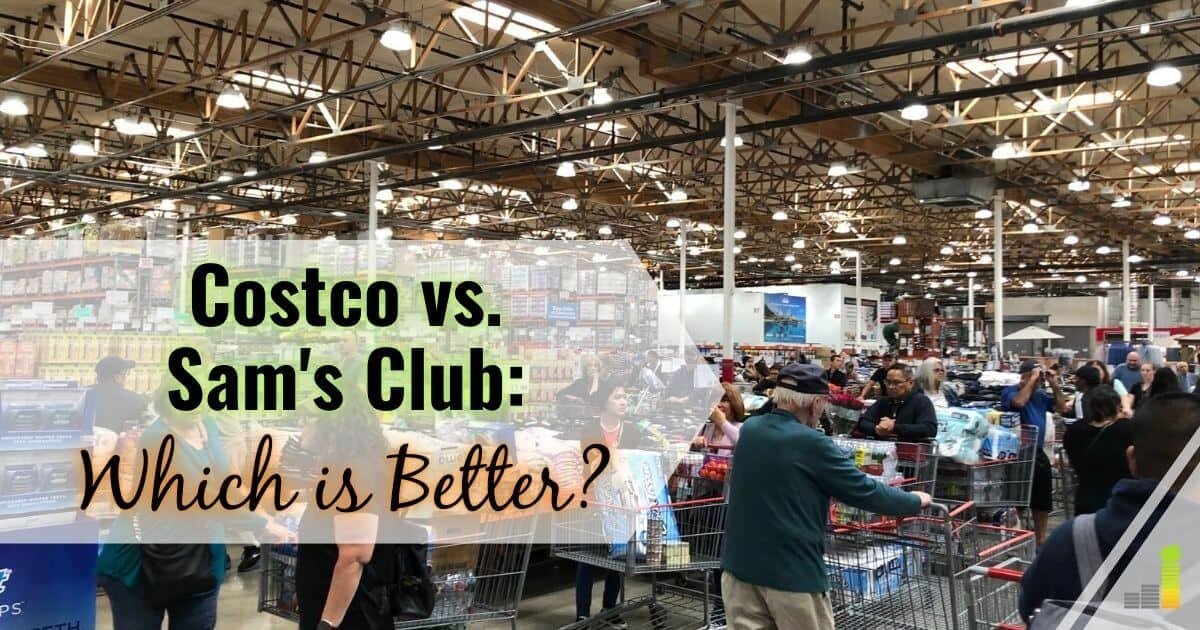
Navigating the world of bulk shopping can feel like a quest for hidden treasure. You're looking for value, quality, and convenience, and often, Sam's Club rises to the top of the list for many households and small businesses. But in today's diverse retail landscape, the question isn't just "What is Sam's Club?" but rather, "How does Sam's Club stack up against its competitors?" This deep dive into a Sam's Club vs. Competitors Comparison will arm you with the insights you need to make the smartest choice for your wallet and your lifestyle.
Think of me as your personal shopping guru, guiding you through the aisles (physical and virtual) to uncover the real differences. We’re going beyond just membership fees to look at the entire shopping experience, ensuring you pick the club — or alternative — that truly serves your needs.
At a Glance: Your Quick Comparison Cheat Sheet
- Sam's Club, Costco, & BJ's Wholesale are the "big three" warehouse clubs, all requiring membership and offering bulk savings.
- Membership Cost: Sam's Club is typically the most affordable entry-point ($50/year for basic).
- Store Count: Costco has the most U.S. clubs, followed closely by Sam's Club. BJ's is strongest on the East Coast.
- Coupon Acceptance: Only BJ's Wholesale Club accepts manufacturer coupons.
- Private Labels: Kirkland Signature (Costco) is renowned for premium quality; Member's Mark (Sam's Club) and Berkley Jensen/Wellsley Farms (BJ's) are also highly regarded.
- Digital Experience: All offer online shopping, mobile apps, and convenient pickup/delivery options, with Scan & Go being a Sam's Club standout.
- Key Alternatives (No Membership): Walmart, Target, Amazon, Kroger, Aldi, and regional players like Smart & Final or WinCo Foods offer various forms of value and convenience without annual dues.
- Specialized Alternatives: Costco Business Center and Restaurant Depot cater specifically to businesses.
Why Compare? Unpacking the Value Proposition
Deciding where to spend your hard-earned money each month is more complex than simply finding the lowest price tag. Warehouse clubs like Sam's Club, founded in 1983 by Sam Walton to extend Walmart's value proposition, promise low unit prices, reliable availability, and quick trips. But they come with a membership fee. The core challenge in any Sam's Club vs. Competitors Comparison is weighing that annual fee against the tangible and intangible benefits you receive.
It’s about more than just the cost of a gallon of milk or a pack of paper towels. It’s about the quality of fresh produce, the convenience of checkout, the breadth of services available, and the overall trust you place in a brand. For some, the cost of membership is a non-issue; for others, it’s a hurdle that makes non-membership alternatives more appealing.
To truly understand which option suits you best, we'll break down the key criteria that separate the contenders.
The Pillars of Comparison: What Really Matters
When evaluating Sam's Club against any alternative, you're essentially looking at several core areas that define the shopping experience and overall value. These aren't just bullet points; they're the lenses through which savvy shoppers assess their options:
1. Membership Price and Perks
This is often the first hurdle. What does that annual fee get you?
- Annual Dues: The upfront cost of entry.
- Tiered Benefits: Do higher tiers offer more, like cash back, free shipping, or earlier shopping hours?
- Fuel Discounts: A significant perk for many, especially with fluctuating gas prices.
- Special Offers: Access to exclusive deals, travel services, or other member-only benefits.
2. Price and Value Per Unit
The reason most people consider warehouse clubs in the first place.
- Unit Costs: The true metric of savings when buying in bulk.
- Package Sizes: Are they manageable for your family size, or will food go to waste?
- Promotions & Coupons: Beyond everyday low prices, how often are there additional savings? (Crucial for clubs that accept manufacturer coupons).
- Rewards & Cash Back: Do premium memberships effectively reduce your overall spend?
3. Assortment and Quality
Variety and reliability are key for consistent shopping.
- Mix of Brands: National favorites versus robust private labels.
- Freshness: Consistency in produce, meat, and bakery items.
- Product Categories: Do they offer more than just groceries? Think electronics, apparel, home goods, and seasonal items.
- Private Label Reputation: How do store brands like Member's Mark compare in quality and price to national brands?
4. Convenience and Access
Your time is valuable.
- Club Density: How many locations are near your home or work?
- Store Layout: Is it easy to navigate, or do you get lost in the aisles?
- Parking & Hours: Simple but crucial practicalities.
- Fast Checkout Options: Mobile scan-and-go, self-checkout, or efficient cashier lines.
5. Digital Experience and Fulfillment
Modern shopping relies heavily on tech.
- App Reliability: Is the mobile app user-friendly for shopping, managing accounts, and using in-club tools?
- Mobile Checkout: Features like Sam's Club's Scan & Go are game-changers.
- Curbside Pickup & Delivery: Speed, fees, and reliability of these services.
- Online Selection: Does the website offer a broader or different selection than in-store?
6. Services Ecosystem
Beyond shopping, what else can the club do for you?
- Pharmacy, Optical, Hearing Centers: Convenient one-stop health services.
- Tire Centers: Often competitive pricing and service.
- Travel & Business Services: Added value for specific needs.
- Co-branded Credit Cards: How robust are the rewards for gas, club purchases, and other spending?
7. Customer Care, Policies, and Trust
The safety net for your purchases.
- Return Policies: How generous and hassle-free are they?
- Satisfaction Guarantees: Especially important for memberships themselves.
- Data Practices & Sourcing: While less immediate, these reflect a company's broader values.
With these criteria in mind, let’s pit Sam’s Club against its most direct competitors.
The Big Three: Sam's Club, Costco, & BJ's Wholesale Club
These three are the titans of the warehouse club industry. While they share core similarities—bulk products, membership models, and satisfaction guarantees on membership fees—their nuances often dictate customer loyalty.
Membership Tiers and Rewards: Who Gives You More for Your Dues?
| Club | Basic Membership | Premium Membership | Key Premium Benefits |
|---|---|---|---|
| Sam’s Club | Club ($50/year) | Plus ($110/year) | 2% cash back (up to $500/year), free shipping, early shopping, instant savings. |
| Costco | Gold Star ($65/year) | Executive ($130/year) | 2% cash back (up to $1,250/year), additional savings, travel benefits. |
| BJ’s | Club Card ($60/year) | Club+ Card ($120/year) | 2% cash back (up to $500/year, as electronic awards), deeper gas discounts. |
| Analysis: |
- Sam's Club offers the lowest entry-level membership, making it a budget-friendly starting point. Its Plus membership is competitively priced for its cash back and shipping perks.
- Costco has the highest entry fee but also the highest potential cash back for its Executive members, appealing to high-volume shoppers.
- BJ's sits in the middle on membership pricing. Its Club+ card offers similar cash back potential to Sam's Club, issued as electronic awards, which might be slightly less flexible than a direct check.
Price, Value, and Unit Costs: Where Do You Save Most?
All three aim for low unit prices. However, the perception of value can differ:
- Sam's Club is often lauded for competitive pricing across groceries and general merchandise. Their Member's Mark private label provides significant savings on everyday staples.
- Costco is renowned for consistently high-quality products, including their premium Kirkland Signature brand, which often matches or exceeds national brand quality at a lower price. This quality perception can translate to higher perceived value even if unit prices are comparable.
- BJ's Wholesale Club stands out by accepting manufacturer coupons. This is a huge differentiator, allowing members to stack savings on top of BJ's already low prices, a feature neither Sam's Club nor Costco offers. BJ's also tends to have slightly smaller package sizes, making bulk shopping more accessible for smaller families or those with less storage space.
Assortment and Quality: Beyond the Bulk Aisle
- Sam's Club: Features a strong mix of national brands and their Member's Mark private label. Member's Mark covers a broad range, from fresh produce to prepared meals, often winning taste tests. The selection leans practical, covering household essentials, electronics, and seasonal items.
- Costco: Famous for its Kirkland Signature brand, which has achieved near-legendary status for its quality across a vast array of products, from olive oil to clothing to golf balls. Costco's selection often includes more premium or gourmet items, particularly in the food and wine departments, appealing to a slightly more upscale demographic.
- BJ's Wholesale Club: Offers two main private labels: Berkley Jensen for non-perishables (office, home, apparel) and Wellsley Farms for fresh and prepared foods. Their assortment is a solid blend of national brands and private labels, with a particular strength in grocery, especially fresh produce and bakery items.
Convenience and Access: Getting In and Out
- Store Count (U.S. & Puerto Rico):
- Costco: ~629 locations
- Sam's Club: ~600 locations
- BJ's Wholesale Club: >210 locations (primarily concentrated in 17 Eastern U.S. states)
- Analysis: Costco and Sam's Club offer the broadest geographic coverage, making them more accessible to most U.S. shoppers. BJ's is an excellent option if you live on the East Coast, but its reach is limited elsewhere.
- Checkout Options:
- Sam's Club is a leader here with its Scan & Go mobile checkout (scan items with your phone, pay in-app, skip lines) and efficient self-checkout and curbside pickup options.
- Costco has invested in self-checkout but largely relies on efficient cashier lines, which are often very fast despite long queues.
- BJ's offers self-checkout and a "ExpressPay" feature in its app, similar to Scan & Go.
Digital Experience and Fulfillment: Shopping in the Modern Age
All three clubs have strong digital presences:
- Sam's Club: Offers robust online ordering, curbside pickup, and delivery. Their Scan & Go app is a major convenience differentiator for in-club shopping, allowing truly skip-the-line experiences.
- Costco: Provides online shopping with various delivery options, including same-day for groceries through Instacart and standard shipping for larger items. The Costco app allows digital membership cards and shopping lists.
- BJ's: Features online ordering for in-club pickup or delivery. Their app includes the "ExpressPay" mobile checkout and digital coupons, making it a strong contender for digital convenience on the East Coast.
Services Ecosystem: More Than Just Groceries
- Fuel Discounts: All three offer discounted gas at their clubs, which can be a huge draw. Premium members typically receive even better savings.
- Pharmacy, Optical, Tire Centers: All three offer these essential services, often at competitive prices. Sam's Club and BJ's also offer military discounts on memberships, which can be a key deciding factor for service members and their families.
- Travel Services: Costco is particularly known for its robust travel program, often offering exclusive packages and deals. Sam's Club and BJ's also have travel services, though perhaps less extensive.
- Co-branded Credit Cards:
- Costco Anywhere Visa by Citi: Excellent cash back across various categories: 5% on gas (Costco), 4% on other eligible gas/EV, 3% on restaurants/travel, 2% at Costco, 1% elsewhere. No annual fee.
- Sam’s Club Mastercard: Strong gas rewards (5% on first $6,000/year), 5% on most Sam’s Club purchases (for Plus members), 3% on dining/takeout, 1% elsewhere. No annual fee.
- BJ’s One Mastercard (Basic/Premium): 3%/5% rewards on most BJ’s purchases, 1.5%/2% elsewhere, plus gas discounts ($0.10/$0.15 off per gallon at BJ's gas). No annual fee.
- Analysis: All three credit cards offer compelling rewards, especially on gas. Costco's card generally provides higher overall rewards for travel and external gas, while Sam's Club and BJ's cards are particularly strong for in-club purchases and their respective gas stations.
Return Policies and Trust: Peace of Mind for Your Purchases
All three clubs are known for consumer-friendly return policies and membership satisfaction guarantees. If you're unhappy with your membership, you can typically get a full refund.
- Costco: Famous for its lenient "return anytime" policy, even without a receipt, for most items. Electronics, appliances, and cell phones have a 90-day limit.
- Sam's Club: Recommends a receipt but often isn't mandatory. Most electronics and TVs have a 90-day window, with cell phones/connected devices at 14 days. Certain items like gift cards are non-returnable.
- BJ's Wholesale Club: Allows up to one year for non-grocery merchandise in new condition. Electronics, TVs, and laptops have a 90-day limit. Certain items (like gift cards, final sale apparel) are non-returnable.
Overall: While minor differences exist, all three generally offer robust return policies, contributing to customer trust.
Beyond the Big Three: Other Sam's Club Competitors & Alternatives
Sometimes, a warehouse club isn't the right fit. Perhaps you don't buy in large enough quantities, don't want to pay a membership fee, or need different types of products. Many other retailers offer competitive pricing, convenience, or specialized selections.
For Everyday Savings and Convenience (No Membership Required)
- Walmart: The parent company of Sam's Club, Walmart is a national supercenter leader. It offers consistently low prices on groceries and general merchandise without a membership fee. You can find smaller package sizes, and their Walmart+ membership provides free delivery and fuel discounts, essentially acting as a "mini-club" for convenience.
- Target: Blends a curated assortment with stylish private labels (think Archer Farms, Good & Gather, Everspring) and frequent promotions through Target Circle. It doesn't require membership and offers excellent convenience via Drive Up (curbside pickup) and delivery through Shipt. Great for combining groceries with home goods and apparel.
- Amazon: The online retail giant provides an unmatched selection, competitive pricing, and fast delivery for Prime members. While not a physical club, its Subscribe & Save options offer bulk discounts, and Prime members get access to Amazon Fresh and Whole Foods grocery delivery. For businesses, Amazon Business caters to bulk and specific commercial needs. Amazon is arguably the top online alternative for sheer convenience and breadth.
- Kroger: A dominant traditional grocer, especially strong in the Midwest and South. Kroger is known for its fresh food quality, extensive private label depth (like Simple Truth organic items), and loyalty-driven savings via its Kroger Boost membership (free delivery, fuel discounts). Offers pickup and same-day delivery.
- Aldi: A European import that has taken the U.S. by storm with its rock-bottom prices and incredibly streamlined, limited-assortment model. No membership is required, and it's famous for its award-winning private labels and weekly "Aldi Finds." Ideal for budget-conscious shoppers who prioritize price over brand selection.
- Meijer: A Midwestern supercenter chain that offers a full line of grocery and general merchandise. Like Walmart, it's a one-stop shop without a membership fee. Its mPerks loyalty program provides digital coupons and rewards, alongside convenient pickup and delivery services.
For Specific or Niche Needs (Membership or Business-Focused)
- Smart & Final: Primarily on the West Coast, Smart & Final is unique because it sells club-size products without requiring membership. It effectively blends restaurant-friendly packs with everyday groceries, making it a popular choice for small businesses and larger households that don't want a club membership.
- WinCo Foods: An employee-owned chain in Western/Midwestern states, WinCo competes aggressively on price with a warehouse-style experience. No membership fee, known for bulk bins, and very low prices. A key differentiator: WinCo does not accept credit cards, only debit cards or cash, which can be a deal-breaker for some.
- Restaurant Depot: A business-only model, offering wholesale pricing on foodservice ingredients and supplies. Membership is free but limited to eligible businesses and non-profits (e.g., restaurants, caterers, schools). If you run a food-related business, this is a prime alternative for bulk ingredients.
- Costco Business Center: While requiring a standard Costco membership to shop, these centers are designed specifically for business buyers. They emphasize commercial-sized packaging, bulk cases, and often carry unique SKUs not found in regular Costco warehouses, like large institutional food items or specialized equipment.
Your Top Alternatives to Sam's Club: When to Choose What
Based on the detailed comparison, here are the top alternatives and scenarios where they truly shine:
- Costco Wholesale: For Premium Quality and Robust Services.
- Why it stands out: Unmatched quality in its Kirkland Signature private label, broad national and international coverage, and a comprehensive services ecosystem (fuel, optical, travel, tires). The Executive cash back tier offers the highest earning potential for high-volume shoppers.
- Best for: Shoppers prioritizing consistently high quality, extensive ancillary services, and those who spend enough to maximize the Executive membership's cash back.
- BJ’s Wholesale Club: For Flexibility and Coupon Stacking.
- Why it stands out: The only warehouse club that accepts manufacturer coupons, allowing for layered savings. Offers more manageable package sizes than its competitors, making bulk shopping less intimidating. Strong presence and competitive gas discounts on the East Coast.
- Best for: Shoppers who love to coupon, live on the East Coast, prefer national brands, and appreciate slightly smaller bulk sizes.
- Amazon Prime: For Unmatched Online Convenience and Selection.
- Why it stands out: The epitome of convenience with fast shipping on an incredibly vast online selection, covering both bulk staples and everyday quantities. Benefits like Subscribe & Save, flexible delivery options, and access to grocery delivery (Amazon Fresh/Whole Foods) reduce the need for physical store trips.
- Best for: Busy households prioritizing convenience, online shopping, and doorstep delivery over physical club visits and a membership fee.
Making Your Decision: A Practical Framework
So, after all this information, which is truly the "best" warehouse club or alternative for you? There's no single, universal answer. The ideal choice hinges on your unique circumstances:
- Location, Location, Location: How close are the clubs or alternative stores? A great deal is less appealing if it means a 45-minute drive. Use online store locators to map out your options.
- Shopping Frequency & Volume: Do you buy in truly bulk quantities often enough to justify a membership fee? Or would smaller packs from a non-membership store suffice? Consider how often you'd realistically visit. You might also want to ask yourself, Is a Sams Club membership worth it? if you're not sure about the upfront cost.
- Preferred Brands & Quality: Are you loyal to specific national brands, or are you happy to explore high-quality private labels? If premium quality is paramount, Costco might edge out. If couponing on national brands is your game, BJ's is your winner.
- Value of Ancillary Services: How much would you use the gas station, optical center, pharmacy, or tire services? These add-ons can significantly increase the value of a membership.
- Digital Comfort: Do you prefer to shop in-store with mobile convenience (like Sam's Club's Scan & Go) or primarily online with fast delivery (like Amazon)?
- Trial Runs: Many clubs offer guest passes or temporary memberships (sometimes with a surcharge). Take advantage of these to experience the store layout, product selection, and general vibe before committing to an annual fee.
Your actionable next step: Don't just read about it; experience it. Visit the stores that seem like the best fit based on our comparison. Compare a basket of your most frequently purchased items across your top 2-3 contenders. Factor in potential fuel savings and credit card rewards. The club that saves you the most time and money, while providing the quality and convenience you expect, will reveal itself. Happy shopping!